The Elusive Hunter: Getting to Know the Cooper's Hawk
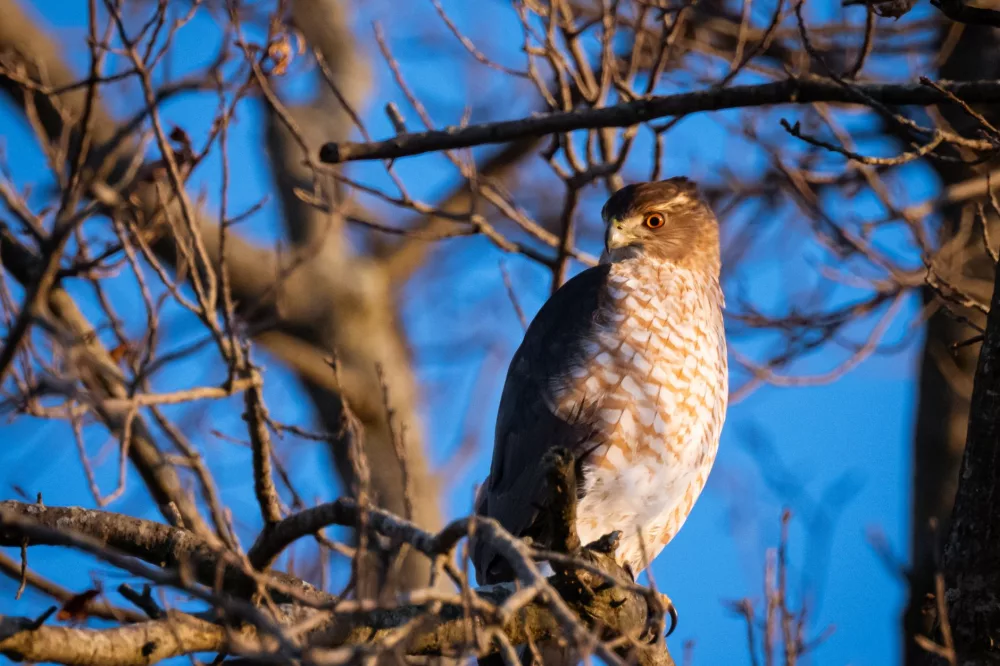
I've always had a soft spot for birds of prey, and the Cooper's Hawk, in particular, really captures my attention. There's just something so mesmerizing about their agility and their stealthy nature. These incredible birds, part of the Accipiter genus, are true masters of their domain, whether that's a dense forest or, increasingly, our bustling suburban neighborhoods. They're often misunderstood, sometimes even unfairly demonized, but I find them to be one of the most fascinating avian predators out there. Let's really dig into what makes the Cooper's Hawk such an amazing creature, from its sharp talons to its piercing gaze. I promise, you'll gain a new appreciation for these feathered hunters.
Meet the Cooper's Hawk: Identification Essentials
When you're out birdwatching, or just enjoying your backyard, spotting a Cooper's Hawk can be quite an exciting moment. They're not always easy to see, often blending into the tree canopy, but once you do, their distinctive features truly stand out. You know, these guys are often confused with their smaller cousin, the Sharp-shinned Hawk, which makes accurate identification a fun challenge for any birder.
What to Look For: Adults vs. Juveniles
Adult Cooper's Hawks, to me, are just stunning. They sport a rather striking slate-blue or grey back and head, often giving the impression of a 'dark cap' on their heads. Their undersides are a beautiful rufous (rusty orange) barring, which is quite distinct against their white belly. Their long, rounded tail, often with a white band at the tip, is another key identifier. That tail is actually quite important for their incredible maneuverability through dense branches. Their eyes, a fiery red in adults, seem to pierce right through you!
Juvenile Cooper's Hawks, though, are a bit different, and it's something I always keep in mind when I'm trying to identify them. They have a brown back and head, often streaked with white on their underparts. Their eyes, unlike the adults', are a bright yellow. It's really cool to see that change as they mature, isn't it? The streaking on their chest often looks like vertical brown streaks on a white background, which is a good clue if you get a decent look.
Here are a few quick tips I use to tell them apart from similar raptors, especially Sharp-shinned Hawks:
- Head Size & Shape: Cooper's Hawks tend to have a larger head that extends noticeably beyond the wrists of their wings in flight, giving them a 'long-necked' appearance. Sharp-shinneds look more 'head-less.'
- Tail Shape: A Cooper's Hawk usually has a rounded tail with varying length outer tail feathers, whereas the Sharp-shinned's tail is more square-ended.
- Eye Color: Remember, adults have those intense red eyes; juveniles have yellow.
- Overall Size: Cooper's Hawks are generally larger than Sharp-shinned Hawks, though females are significantly larger than males, which can sometimes make identification trickier.
Where They Live and Roam: Habitat and Range
Cooper's Hawks are incredibly adaptable, which is one of the reasons I think we're seeing them more often. Originally, their preferred haunts were extensive forests and woodlands, both deciduous and coniferous. They really thrive in areas with a mix of dense tree cover for nesting and perching, alongside more open areas for hunting. This gives them the perfect ambush hunting grounds they need.
Their range covers a vast swath of North America, stretching from southern Canada all the way down through the United States and into parts of Mexico. While many populations are resident, particularly in the southern parts of their range, northern populations are migratory. I've often wondered what it must be like for them to undertake those long journeys, following the seasonal shifts in prey availability. It's a tough life, but they're built for it. Increasingly, they've also become quite comfortable living in suburban and even urban environments, taking advantage of the abundance of songbirds at backyard feeders. This urban adaptation is pretty remarkable, showing just how resourceful these birds are.
The Hunter's Edge: Hunting and Diet
This is where the Cooper's Hawk truly shines – as an apex predator in its niche. Their hunting style is what I'd describe as aggressive and incredibly athletic. They are masters of surprise, using dense cover to their advantage, often flying low and fast through trees to ambuscade unsuspecting prey. It's a thrilling sight if you're lucky enough to witness it, though probably less so for the prey!
Their diet is primarily made up of medium-sized birds. Think robins, jays, starlings, and pigeons. They're not picky, though, and will take smaller birds too. I've even seen one take a mourning dove right off a feeder. It's a quick, decisive strike. But it's not just birds; they also go for small mammals like squirrels, chipmunks, and sometimes even bats. They're opportunistic, and if it's available and fits their size, they'll likely go for it. Their strong talons are perfect for gripping and dispatching their prey, and their sharp, hooked beak is ideal for tearing flesh. It's a stark reminder of the wildness that exists even in our backyards.
I find their hunting technique absolutely fascinating. They don't typically soar high in the sky like larger Buteo hawks. Instead, they prefer to weave and dodge through the canopy, using their long tails as rudders. This makes them incredibly effective in their chosen habitats. They're like avian ninjas, really.
Family Life: Breeding and Nesting Habits
The breeding season for Cooper's Hawks usually kicks off in spring, typically around March or April, depending on the region. The courtship rituals are quite impressive, with aerial displays that involve soaring and diving, sometimes even with both birds performing a synchronized flight. It's pretty romantic for a hawk, if you ask me!
They're meticulous nest builders, usually choosing a tall tree in a dense patch of woods. The nest itself is a sturdy platform made of sticks, often lined with bark strips or green leaves. They frequently reuse nests from previous years or even take over nests built by other large birds. Typically, the female lays a clutch of 3 to 5 pale bluish-white eggs, which she incubates for about 30 to 36 days. During this time, the male is responsible for bringing her food. It's a real partnership.
Once the chicks hatch, they're completely helpless, covered in a fluffy white down. Both parents work tirelessly to feed them. The young hawks, often called fledglings, will leave the nest after about 25 to 34 days, but they'll stick around the parents for several weeks after that, learning essential hunting skills. It's during this post-fledging period that you might hear their insistent begging calls from the treetops. It's a loud, demanding sound that really carries. Watching them learn to hunt, stumble, and eventually succeed is truly a privilege.
Conservation and Challenges: A Rollercoaster Ride
The story of the Cooper's Hawk isn't without its ups and downs. Back in the mid-20th century, their populations, like many other birds of prey, took a serious hit due to the widespread use of pesticides like DDT. It caused eggshell thinning, making successful reproduction nearly impossible. It was a really grim time for them, and many feared for their future.
Thankfully, with the ban of DDT and increased conservation efforts, their numbers have made a remarkable comeback. It's a wonderful success story, one that truly illustrates the positive impact of environmental policy and public awareness. Today, their conservation status is considered 'Least Concern' by the IUCN, which is great news.
However, they still face challenges. Habitat loss and fragmentation are ongoing concerns, particularly as urban areas expand. Collisions with windows and vehicles are also problems, especially for young, inexperienced birds. And, of course, some people still view them as pests, particularly those who keep backyard chickens or cherish their feeder birds. It's a complex dynamic, but I believe education is key to fostering coexistence. Understanding their role in the ecosystem, as natural predators, helps us appreciate their presence, even if it means losing a bird or two at the feeder sometimes. They're just doing what hawks do best.
In my opinion, observing a Cooper's Hawk in its natural element, whether it's soaring silently over a forest or making a daring dash through a suburban yard, is a privilege. They remind us that wild beauty and fierce survival instincts are alive and well, even in the most unexpected places. They're tough, they're clever, and they absolutely deserve our respect and protection.
Editorial Team
Staff analyst and editor writing in-depth guides, analysis, and comprehensive coverage.