Unpacking the 'Grenadier': From Elite Infantry to Deep-Sea Dweller
When I hear the word "grenadier," my mind immediately jumps in two very different directions. It's fascinating, isn't it, how a single term can conjure up images of disciplined, musket-wielding soldiers on one hand, and then a strange, deep-sea fish on the other? We're going to explore both of these distinct meanings, uncovering their histories, characteristics, and why they hold this peculiar moniker. It’s a journey that takes us from the brutal battlefields of Europe to the dark, crushing pressures of the abyssal plains. So, let's unpack what it means to be a grenadier.
The Military Grenadier: A Legacy of Explosive Might
For many, the primary association with "grenadier" is military. And for good reason! The term first appeared in the late 17th century, a time when armies were just beginning to experiment with smaller, throwable explosive devices – the hand grenade. These weren't the sleek, pineapple-shaped grenades we know today; nope, they were often crude, iron spheres filled with gunpowder, lit by a fuse. Imagine trying to throw one of those accurately in the chaos of battle! It wasn't an easy job, which meant that soldiers selected for this dangerous task had to be particularly strong, brave, and, let's be honest, a little bit reckless. They were the original specialists, you could say.
Early Origins: The Hand Grenade and its Wielders
Initially, grenadiers were exactly what the name implied: soldiers trained to hurl grenades. This required not only physical prowess but also a certain degree of nerve. You had to light a fuse, count, and then throw the grenade before it exploded in your hand or, worse, prematurely near your own lines. Because of the inherent dangers and the specialized nature of their role, grenadiers quickly gained a reputation as elite troops. They were often at the vanguard of an attack, tasked with clearing obstacles and breaking enemy formations with their explosive projectiles. Their distinctive tall, conical caps, or mitre hats, weren't just for show either; they were practical, allowing grenadiers to shoulder their muskets without the brim of a regular hat getting in the way while throwing grenades over their heads.
The Rise of Elite Infantry: From Thrower to Stormtrooper
Over time, as hand grenades became less practical in certain combat scenarios or evolved into different forms, the grenadier companies didn't disappear. Instead, they transformed. Their reputation for courage, physical strength, and reliability meant they remained the crack troops of an army. They were typically taller, stronger men chosen for their imposing presence and fighting spirit. They were entrusted with critical tasks: spearheading assaults, forming the reliable core of a defensive line, or executing challenging maneuvers. We see this evolution clearly in units like the Grenadier Guards of the British Army, formed in 1656. They might not be throwing hand grenades in the traditional sense today, but they certainly maintain that historical legacy of being an elite, ceremonial, and frontline fighting force. Their distinctive bear-skin caps are a direct descendant of those earlier mitre hats, reminding us of their explosive origins.
By the 18th and 19th centuries, many European armies had grenadier units, and they were often the pride of their respective nations. Think of Napoleon's Imperial Guard – those formidable soldiers, often depicted in their iconic tall hats, were the emperor's most trusted grenadiers. Their presence on the battlefield was often enough to instill fear in the enemy and boost the morale of their own side. I often imagine the sight and sound of a regiment of grenadiers marching into battle; it must have been an awe-inspiring, if terrifying, spectacle.
Modern Grenadiers: Evolution in Warfare
The concept of a grenadier hasn't faded; it's just adapted. In contemporary military parlance, a grenadier is often a soldier specifically equipped with a grenade launcher, like the M203 attached to an assault rifle, or a standalone weapon system. These modern devices allow soldiers to project explosive or non-lethal munitions much further and more accurately than any hand-thrown grenade ever could. The role is still specialized, still about delivering an explosive punch, albeit with far more sophisticated tools. We see these specialists in various infantry units, providing crucial indirect fire support and area denial capabilities.
A Deep Dive into the Abyssal Grenadier: The Rat-tail Fish
Now, let's switch gears completely and plunge into the ocean's depths, because the other significant "grenadier" couldn't be more different from its military counterpart. Here, we're talking about a family of deep-sea fish known as Macrouridae, more commonly referred to as grenadiers or, somewhat descriptively, "rat-tails."
Unveiling the Ocean's Mysterious Denizen
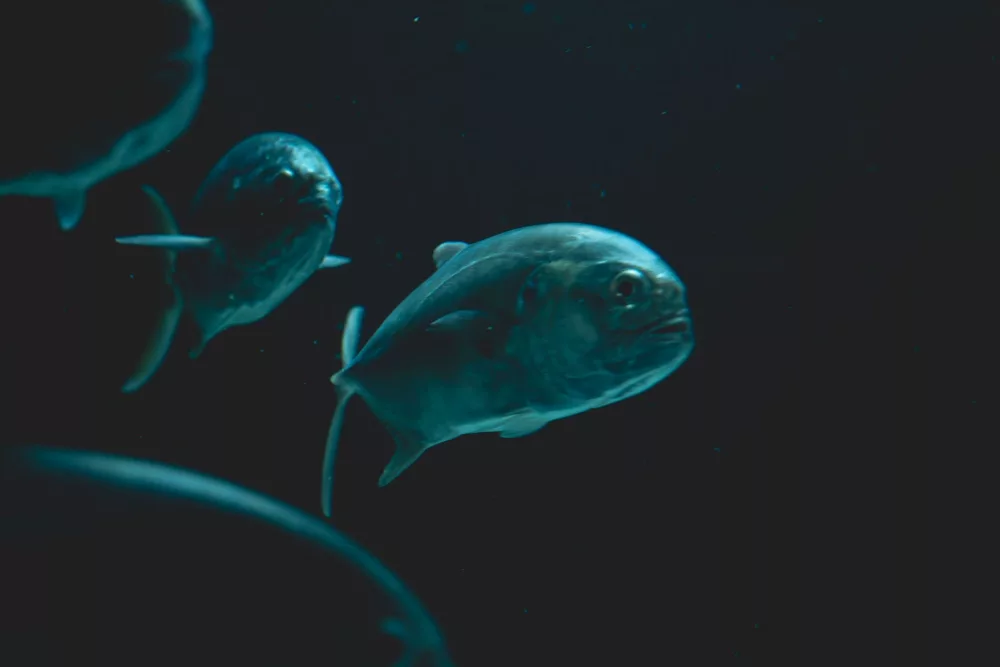
These fish are truly creatures of the deep, inhabiting cold, dark waters at depths ranging from a few hundred meters down to several thousand. When I first learned about them, I was struck by their appearance: large heads, prominent eyes (understandable for dimly lit environments), and a body that tapers drastically to a long, whip-like tail, much like a rat's. They typically don't have a caudal (tail) fin, which is quite unusual. There are over 400 recognized species in this family, making them one of the most diverse groups of deep-sea fish.
Life in the Deep: Habitat and Adaptations
Life in the abyssal zone is tough. It's cold, dark, and the pressure is immense. Grenadiers have evolved some incredible adaptations to thrive here. Many species have large, light-sensitive eyes to detect even the faintest flickers of light, perhaps from bioluminescent prey or mates. Their bodies are often covered in small, rough scales, which might offer protection against the constant pressure. And speaking of bioluminescence, some grenadier species can produce their own light, often from specialized organs called photophores. This light can be used for attracting prey, signaling to others, or even for camouflage against residual light from above.
- Diet: Most grenadiers are opportunistic feeders. They're scavengers, happy to munch on whatever dead organic matter drifts down from the surface. They also prey on small invertebrates like crustaceans, worms, and cephalopods that live on or near the seafloor.
- Slow Metabolism: Given the scarcity of food and the cold temperatures, these fish have a very slow metabolism. This means they grow slowly and can live for a very long time, sometimes decades.
- Reproduction: We don't know everything about their reproductive strategies, but it's believed many species lay large numbers of small, buoyant eggs that drift in the water column before developing and sinking to the depths.
Ecological Significance and Human Interaction
Ecologically, grenadiers play a crucial role in deep-sea ecosystems. They're a significant part of the food web, acting as both predators and scavengers, helping to recycle nutrients in an otherwise barren environment. Some larger species are even prey for deep-diving whales and other large marine predators. From a human perspective, several grenadier species, particularly the rough-head grenadier (Macrourus berglax) and the giant grenadier (Albatrossia pectoralis), are commercially fished in certain parts of the world, especially for their white, flaky meat. However, their slow growth rates and deep-sea habitat make them particularly vulnerable to overfishing, and there's a lot of concern about managing these fisheries sustainably.
So, there you have it. From the battle-hardened human soldier throwing explosives to the mysterious, scavenging fish of the deep, the term "grenadier" certainly covers a remarkable range of meanings. It really makes you think about the power of language and how words can evolve or be applied across such disparate realms. I find it fascinating that a word signifying a tough, specialized role for a human also describes a resilient, specialized creature thriving in one of Earth's most challenging environments. It just goes to show, doesn't it, how much history and nature can surprise us with their connections?
Editorial Team
Staff analyst and editor writing in-depth guides, analysis, and comprehensive coverage.